-
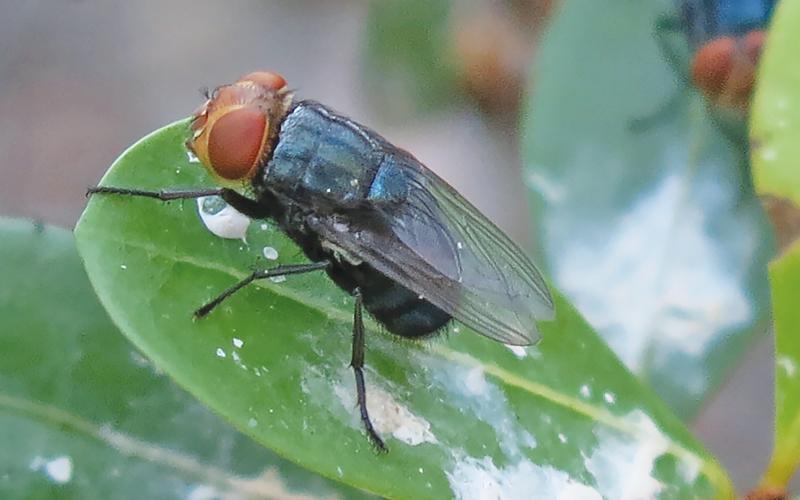 (USDA | CONTRIBUTED PHOTO) The New World Screwworm has broken through barriers and into Mexico, as livestock producers in the United States prepare for a potential break in the country. An informational meeting will be held in Young County regarding the threat.
Those in Young County and surrounding areas have the opportunity to learn more about the looming New World Screwworm threat and measures they can take if the threat reaches the United States.
Texas Farm Bureau District 3 Director Greg Buenger will be hosting a meeting at 7 p.m. Monday, June 23 at North Central Texas College in Graham to provide a status update on the New World Screwworm (NWS), biology and prevention and treatment strategies.
Buenger’s farm bureau district is 17 counties, including Young and Jack counties. While the event is not officially sanctioned by the Texas Farm Bureau, Buenger is hoping to answer NWS questions.
“We’re going to tell people historically what’s happened and what it means today. We’re going to talk about the physiology and biology of these guys. We’re going to talk about measures, preventive treatment and otherwise. We’re going to talk about reporting, how that would be done,” Buenger said.
Additionally, the meeting will go into the federal mandates and the bureaucracy these organizations have to cut through to get production of these facilities started to stop the northern movement.
“I’m a veterinarian. It’s reality for me, because I was a kid when it was here last time,” Buenger said. “The economic impact, the animal impact, the wildlife impact, the livestock impact is going to be pretty profound if it were to get here, and there’s great speculation it’s going to be by August or September unless we can get some miraculous production of sterile flies and make a barrier.”
The United States Department of Agriculture releases the Census of Agriculture every five years, with the last results released in 2022. The cattle industry alone in Texas accounts for $15.5 billion in market value.
“Livestock-wise it will be devastating, because just any procedure we do in livestock – castrating, dehorning, tagging, banding, branding, any of those things – produces some sort of a wound. If we don’t do that in the wintertime when the flies can’t live, we have got a problem,” Buenger said.
NWS that can lay eggs in living animals and those fly larvae burrow into the flesh of a living animal and cause serious and deadly damage to that animal.
“The flies lay eggs around wounds, but they also can lay eggs around mucous membranes, like eyes and so forth and even things like the sheath of a horse,” Buenger said. “These larvae hatch in about 12 hours from when they’re laid, they start feeding on live tissue, eating the animal. They eat for six or seven days, then they pupate, fall down. Seven days later, they hatch and there are more flies.”
NWS can infest livestock, pets, wildlife, occasionally birds and in rare cases, people, according to the United States Department of Agriculture.
NWS is endemic in Cuba, Haiti, the Dominican Republic and countries in South America. Cases have spread to Costa Rica, Nicaragua, Honduras, Guatemala, Belize, El Salvador and Mexico.
USDA eradicated NWS from the United States in 1966 using the sterile insect technique, but there is a constant and new heightened risk of reintroduction into the country.
At the end of May, USDA announced that they were investing $21 million to renovate an existing fruit fly production facility in Metapa, Mexico in an effort to eradicate the insect. The facility would produce 60-100 million sterile flies to push the population further south in Mexico.
Texas Department of Agriculture Commissioner Sid Miller released a statement at the end of May regarding the funding from USDA for the renovation of the Mexico facility.
“The New World Screwworm cannot be eliminated with half-hearted efforts. Actual eradication requires the strategic release of millions of sterile flies,” Miller said. “I was skeptical of the Biden Administration’s approach, but this collaborative effort led by Secretary Brooke Rollins at the (USDA), coupled with strong leadership from Texas Congressional members, will expand North American sterile fly production, marking a crucial step forward.”
The STOP Screwworms Act was introduced in the last legislative session to establish a sterile fly production facility in Texas and was referred to the House Committee on Agriculture.
Live animal imports from Mexico have been restricted and the suspension will continue to be evaluated by USDA every 30 days.
U.S. supported sterile insect production facilities in Mexico and Central America have been operating at full production capacity, producing 100 million sterile flies a week. All flies used today are raised in the Panama - U.S. Commission for the Eradication and Prevention of Screwworm Facility.