-
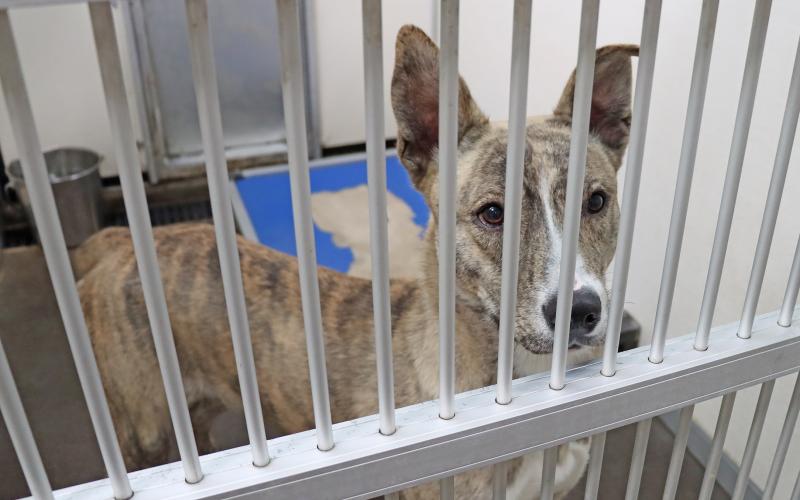 (ARCHIVE PHOTO | THE GRAHAM LEADER)
Revised and updated procedures for the city of Graham animal control officer were approved recently after two readings from the Graham City Council.
City Manager Eric Garretty and Animal Control Officer Mike Watts introduced the changes to the city council during their Thursday, Jan. 16 meeting.
“The city’s animal control officer conducted an extensive review of the city’s current animal control ordinance and determined that significant revisions were required to more formally stipulate the procedure for the identification and handling of dangerous dogs, and revise and clarify the impoundment procedures for animals found to be astray,” Garretty said.
The changes came about due to a meeting between members of the city, Graham Police Department and the Humane Society of Young County.
One of the largest changes approved during a second reading Thursday, Jan. 30, was regarding what the city is able to do with an impounded animal after the initial five-day holding period.
“We’ve had situations where we can’t find the owner, or the owner won’t come forward to claim the animal, and it’s just flat out an expense,” Garretty said. “…After the initial five day impoundment period... we can transport the humane society or the ACO, or the city manager, may order the destruction of the dog or the cat. I understand for some of the folks in town that may seem a little extreme, but sometimes it comes to that. We can’t find a place, and it’s taxpayer dollars going to pay the impoundment fees.”
The time limit portion of the ordinance for impoundment was changed to dogs and cats bearing an identification chip being held for a minimum of five days, not including Sundays. Dogs or cats that do not have an identification chip will be held for a minimum of three days, not including Sundays.
“In the event that exigent circumstances are known to exist, at the sole discretion of the animal control officer, or the city manager, the impoundment period may be extended,” Garretty said. “We’re not trying to unnecessarily destroy animals, but sometimes the situations dictate we have no other choice, and that wasn’t clear in the previous ordinance.”
Watts explained the process of impoundment and stated the animal is taken to the shelter where it is housed for five days to provide the owner with a chance to reclaim the animal.
“If the animal is reclaimed, then the owner will come to City Hall, speak with me, where they can be issued a citation,” Watts said. “They’re also required to pay an impoundment fee to the city, to pay for the process and they also have to provide proof of rabies vaccinations, or if the animal is not vaccinated, provide a prepayment plan with a veterinarian that it will be done.”
If an owner does not come forward within the five days, then ownership of the dog is relinquished to the shelter.
Under a section for liability for damages to someone bitten, the city will now adopt the regulation in the Health and Safety Code. Those in violation will be subject to penalties under the state law and additional penalties or remedies in the local code of ordinances.
“The state has made some real advances in dealing with dangerous dogs and just dealing with animal control in general, and there’s extensive state statutes on this now,” Garretty said. “...What the state recommends in your animal ordinances (is something) that says, ‘If there’s a state provision that applies and the city wishes to apply it, the city may apply that state provision and also the state fines and penalties.’”
The ordinance for dogs running at large was expanded from not being able to run or be a large on any unfenced lot, tract, parcel, or area of land within the corporate limits of the city.
The ordinance now extends to all city-owned properties outside the corporate limits of the city such as the Lake Eddleman RV Park and Kindley Park.
The ordinance for relinquishing custody of an unlicensed dogs removed the licensing requirement and instead replaced it with a current rabies vaccination. Dogs without current rabies vaccinations, after being inspected by the animal control officer or another city employee, could be relinquished to the officer or employee.
The inspecting officer also can validate that any and all enclosures where a dog is kept are clean and free of odor. If a dog is found to reside in an unclean enclosure, or an enclosure not free of odor, the animal could be impounded.
Additionally, if a dog attacks, injures, or kills a domestic animal while at large, the court of the appropriate jurisdiction may impose a higher penalty up to and including the double of the fine given by the court.
The licensing portion of the ordinance was amended to licensing tags and the section for licensing fees was removed in its entirety. Vaccination tags are required to be on the collar of a dog or cat.
The impoundment section was changed to task the animal control officer, or another city employee, with creating a registry for impounded cats or dogs showing the breed, color, sex and approximate weight of the animal. The registry will be held where the animal is impounded.
“The animal control officer shall be responsible for the humane treatment of all animals in his custody,” Garretty said. “Impounded dogs and cats shall be fed (at least once per day or as per the need of the animal and given water three times daily), and the impoundment location shall be kept in a clean and sanitary condition.”