-
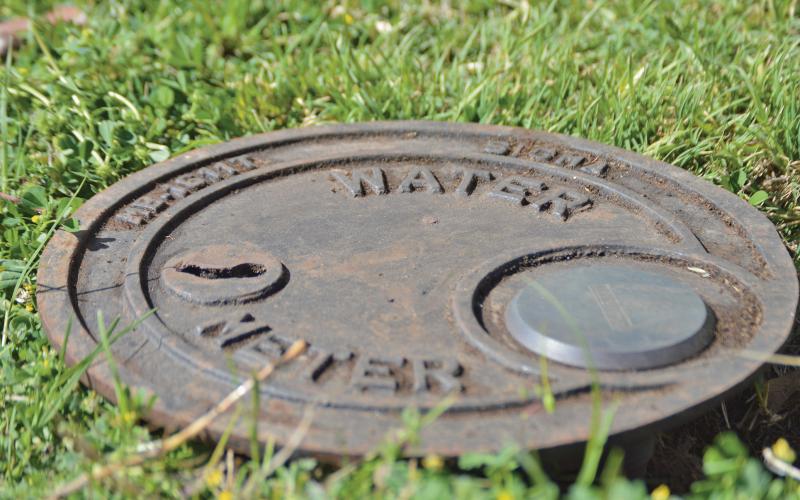 (ARCHIVE PHOTO | THE GRAHAM LEADER) The Graham City Council held a public hearing Thursday, July 31 regarding increases to the water and sewer rates as a way to potentially help with infrastructure projects.
 -
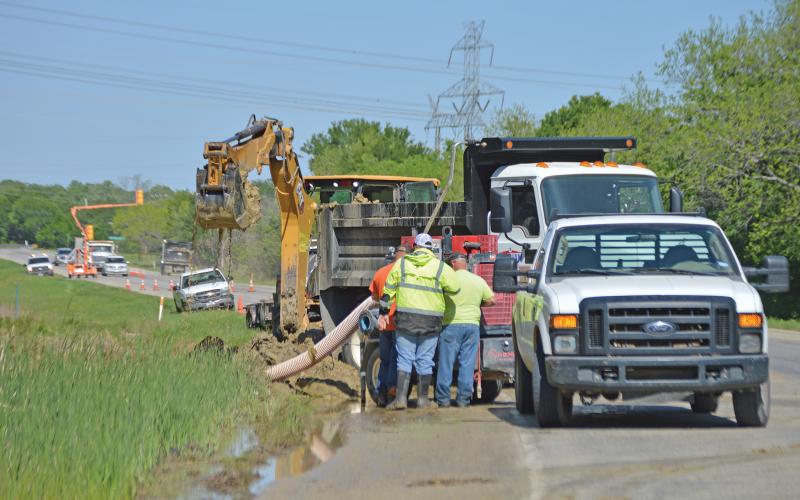 City of Graham crews work to repair the main water line on Hwy. 61 which had ruptured April 15, 2023. The Graham City Council held a public hearing Thursday, July 31 regarding increases to the water and sewer rates as a way to potentially help with infrastructure projects.
Graham residents came out last week to raise concerns to the city council regarding a proposed rate increase for the water and sewer rates.
A public hearing on the proposed water and sewer rate increases was held Thursday, July 31 at the regular meeting of the Graham City Council.
The water and sewer funds are enterprise funds for the city that are supported solely by the rates that are charged for those services.
City Manager Eric Garretty gave a presentation on the proposed rate increases and said after conducting a financial analysis of the city’s water and sewer system capital needs and a water and sewer rate study, the increases were recommended.
“We have aging infrastructure which requires repair and replacement,” Garretty said. “The big one that we’re working on now is we’re overdue to rehabilitate our water storage tanks. …That estimated cost is $300,000-500,000 per year for the next four years.”
Base meter and water volume charges are increasing by 7% across the board for both residential and commercial customers both inside and outside the city limits. A 7% increase is also proposed for sewer rates for city residents.
“The 2024 water rate study recommends an increase of water rates of 7% per year through the year 2029,” Garretty said. “We’re catching up on our revenues that we need to maintain the system.”
The city manager said residents should expect a 7% annual increase in water rates through 2029 as operating expenses increase.
He added that a similar increase should be expected for the sewer rates to be able to rehabilitate the aging water treatment plant, with an estimated project cost of $15 million.
City resident Robin Sikes asked the city if the infrastructure would be improved with the rate increases or would remain the same in areas of the city.
“I’m just wondering why the maintenance and the money hasn’t cleared up Graham’s water? We would like as residents to be able to drink the water that comes out of the tap and not have to go give Walmart more money for water that we’re already paying for,” Sikes said.
Mayor Alex Heartfield said the city does the best it can with the funding it has to keep the water clean, drinkable and passing the standards required.
Following Sikes, resident Leslie Singleton asked about the justification for pushing the rate increase through 2029. Garretty said the city is trying to spread the increase out year over year rather than making a large jump in one year.
“It takes us until 2029 before we’re not having to use savings, that cash reserve, to be able to balance revenues and expenses of the water fund,” he said. “That’s based on those projected revenues and projected expenses. We’re trying to do better planning.”
Singleton asked if the city considered alternatives for recapitalization projects. The city manager said other projects have caused other expenses that stopped improvement projects from occurring.
“Basically, between 2014 and 2021, we could not find the money to do what needed to be done, and so that built up what they call bow wave of capital need, and we basically ran out of time,” he said. “(An example) of that is we tried to program in a project to rehabilitate and upgrade the Woodland storage tank. But before we could even get that project underway, a major pump failed over there.”
During the presentation from the city manager another city was said to use a surcharge and Singleton asked if that would be a better alternative over the 7% increase over the next five years.
The city manager said the council opted not to do that for this budget cycle, but are still open to consider that during the budget workshop Thursday.
“For those of us that are on a fixed income, 7% per year for the next five years is a lot when you consider that inflation is growing at 2-3%,” Singleton said. “I understand that we’ve gotten behind, but perhaps we consider other alternatives to catching up.”
Garretty said the city will have to use $500,000-600,000 from its savings fund to meet the demand for the upcoming fiscal year.
“There’s only so much of an increase the ratepayers can bear, and we’re sensitive to that. But as I mentioned in my presentation, the fact remains that there is infrastructure that is failing right now,” he said.
The city manager said the city has attempted to apply for grants from the Texas Water Development Board which are based on the average median household income.
Garretty said Graham’s average is high, which does not make them ineligible for grants, but less likely to receive one than a community with a lower adjusted medium household income.
The city has annual debt payments of over $1.4 million for the water treatment plant and the alternate water treatment line projects.
With the city’s credit rating, it makes obtaining a loan a difficult decision.
“The sources of money available to us are rates, reserves, grants and loans. Loans at this point will cost us more money because of the higher interest rates,” Heartfield said. “Grants, we apply for what we can, but we’re not always eligible. If we use up our reserves, we lower our credit rating, which makes our loans even more expensive.”
The city manager said there was a period between 2014 and 2021 when the water rate remained the same which has put the current council in a bind.
“When it came to paying bills, we just kept the rate the same and paid the bills that we had to. ..When it came to any kind of deliberate, consolidated, prioritized plan for addressing infrastructure that was aging out, it was really kind of hit or miss. We didn’t do anything about it until it broke,” Garretty said.
The city council has heard several presentations from the city manager regarding the seriousness of the water and sewer issues. Council member Jeff Dickinson said that the city needs to make water a top priority.
“We’re not here without a water supply. I don’t know how we rationalize that against the police force, the fire department, everything else that we enjoy in this community, but water is absolutely essential to sustaining any community, and our infrastructure is poor, it’s been neglected,” he said.
Two of three readings of the ordinance to increase the water and sewer rates by 7% for the in-progress fiscal year budget have been passed by the Graham City Council.
Those readings were passed during city council meetings Thursday, June 26 and Thursday, July 17.
If adopted, the new rates would take effect with the billing period beginning Wednesday, Oct. 15 and customers would see an increase on the water bill received in November.
The city has a budget workshop scheduled for 6 p.m. Thursday, Aug. 7 at 608 Elm St. where the proposed rates will be discussed again by the council.