-
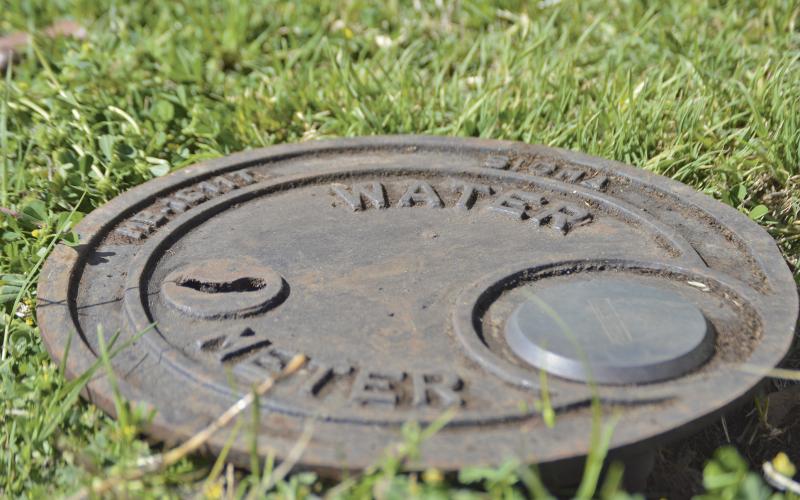 (ARCHIVE PHOTO | THE GRAHAM LEADER) The Texas Commission on Environmental Quality required the city of Graham to send notice to residents this week regarding non-compliance with a lead service line inventory requirement.
The Texas Commission on Environmental Quality required the city of Graham to send notice to residents this week regarding noncompliance with a lead service line inventory requirement in place from the U.S. Environmental Protection Agency.
The notice states that the city violated a drinking water requirement and what the city was doing to correct the action.
“We are required to monitor your drinking water for specific contaminants on a regular basis. Results of regular monitoring are an indicator of whether or not our drinking water meets health standards,” the city said in the release. “We did not complete all applicable monitoring, testing, or reporting for the following requirements), therefore we cannot be sure of the quality of your drinking water during that period.”
The city did not comply with the October 2024 deadline to submit an initial lead service line inventory and will be starting an inventory with an estimated completion date of Oct. 1, 2025.
“That (October date) would mean that if we can (contract) somebody, we're going to try and get on it right away,” City Manager Eric Garretty said. “If we can get somebody to come out and do the inventory by the end of the summer into fall, we'll get it done.”
The city manager said that the city has not checked all the service lines on the customer side of the water meter and are now developing a plan to complete that process.
“We don't think there's a fine associated with it at this point,” Garretty said. “We don't think there's anything wrong with the quality of water, and our testing shows there's nothing wrong with the quality of water. This is an administrative requirement that we haven't been able to meet.”
Over the past year, the city has been asking TCEQ if they were obligated to follow this with limited staffing and resources. The city has seven employees between the water and sewer department, with only two having the proper certifications to be able to perform the work.
“To work on the water lines they need to have a minimum of a Class B water operator license, preferably in our city a Class C, because of the size of the city,” Public Works Director Randall Dawson said. “...For a class C (certification), it's going to be a minimum of two years and three classes.”
The city manager and public works director estimate that the cost to contract the work for checking these lines could range from $100,000-250,000
“The only thing that we know how to do in rural communities is you're going to have to go around every place in the city that there's a water meter, and our estimate is that's around 4,500 individual locations, and you have to dig a hole on the customer side of the meter and uncover the pipe and determine if it's lead or copper,” Garretty said.
The city manager stated there are no lead and copper pipes within the city system and that on the customer side, EPA is requiring replacement of lines.
“There's nothing wrong with the water and we’ve got the test results to prove it. There's nothing wrong with the water that we're sending to your meter,” Garretty said. “If you've got lead or copper pipes, the EPA is telling you (as the customer) have to replace them.”
The city manager said that it was unclear that they had to test all 4,500 meter locations on the customer side.
“The city's responsibility for delivering safe water ends at the meter. In any other situation, we can't even go on to private property and do anything,” Garretty said. “But in this situation, they're telling us that you have our authorization to go on to private property and dig up somebody's driveway to determine what kind of line they have.”
The city manager said the customer side begins at the connection and is the responsibility of the customer in most cases.
“Every meter in the city you've got a meter in the ground where it comes off the water main connects to the meter. That's considered the city side. We only allow a single point of connection at the meter, per meter,” Garretty said. “Once it gets that connection, the responsibility for the water passes to the customer.”
The city’s next step will be to say how it plans to conduct the inventory, which is estimated to take at least a year to complete. The public works director said that the lines that are unknown could also be impacted in the future.
“Basically this letter is stating that it is unknown. Within a year's time frame, TCEQ is going to come out with another mandate that says all your unknowns must be either known or replaced by this date. We just don't know what that's going to look like yet,” Dawson said.
In 2021, the EPA revised the Lead and Copper Rule to include protective measures to reduce lead exposure through drinking water. The rule requires water systems to conduct inventories of their service lines and classify them as lead, non-lead, steel, galvanized, or unknown.
“We do have some galvanized lines in our system, and every time we dig those up, we replace them, but we haven't dug a galvanized service line in five years, at least,” Dawson said.
All community and non-transient non-community public water systems were required to comply with the Lead and Copper Rule Revisions starting Oct. 16, 2024.
“These requirements include the initial service line inventory, notification to persons served of known or potential lead service line, Tier 1 public notification of a lead action level exceedance and associated reporting requirements,” the EPA states on its website.
The EPA notified the Texas Water Development Board and Texas Commission on Environmental Quality in January that they would be de-obligating $88.3 million from the Texas’ Fiscal Year 2023 Bipartisan Infrastructure Law Lead Service Line Replacement capitalization grant.
The EPA said this de-obligation was due to concerns that Texas did not reliably report data under the 7th Drinking Water Infrastructure Needs Survey and Assessment (DWINSA) conducted under the Safe Water Drinking Act.
“As we outlined in our Sept. 25, 2024, letter to you, the EPA reached out to Texas numerous times to encourage Texas’s participation in the 2023 update to the 7th DWINSA lead service line questionnaire,” EPA Mission Support Division Region 6 Acting Deputy Director Melissa Smith said. “Even after the EPA discussed the problem of Houston’s unreliable data with Texas, Texas did not submit updated information to the EPA to resolve this data entry error.”