-
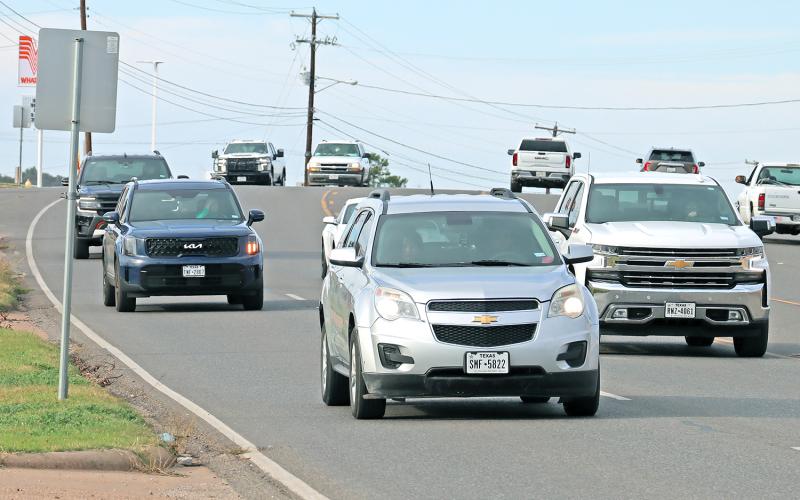 (ARCHIVE PHOTO | THE GRAHAM LEADER) To help facilitate safer and effective communication between drivers with disabilities and law enforcement during traffic stops, new options are available for state-issued driver’s licenses and identification cards.
To help facilitate safer and effective communication between drivers with disabilities and law enforcement during traffic stops, new options are available for state-issued driver’s licenses and identification cards.
The Texas Department of Public Safety (DPS) and the Governor’s Committee on People with Disabilities announced changes coming to Texas driver’s license and identification cards under the Texas Driving with Disability Program.
“The program provides voluntary tools and resources intended to support understanding, reduce misunderstandings and improve public safety outcomes for Texans with disabilities,” DPS said in a release.
Those who voluntarily participate in the Texas Driving with Disability Program will have “Communication Impediment” or “Deaf/Hard of Hearing” at the front of their license or ID card.
“Previously, only the ‘Communication Impediment’ option was available. These optional indicators offered by the department allow qualifying Texans to indicate on their DL or ID card that they have a disability or health condition that may impede their ability to communicate with a law enforcement officer,” DPS said in a release.
Under the Texas Driving with Disability Program, communications impediments are listed as autism, brain injuries, cerebral palsy, Down syndrome, mild intellectual disabilities, Parkinson’s disease, post-traumatic stress disorder and speech and language disorders such as mutism, stuttering, speech delay aphasia and spasmodic dysphonia.
To get signed up for the program, state residents must bring a physician or psychiatrist’s statement form DL-101 that is signed by their health care provider, along with standard documentation for license or ID card transactions, to a DPS office.
To make an appointment at a DPS office for a new license or ID, or to find the list of required documents for an appointment, visit dps.texas.gov.