-
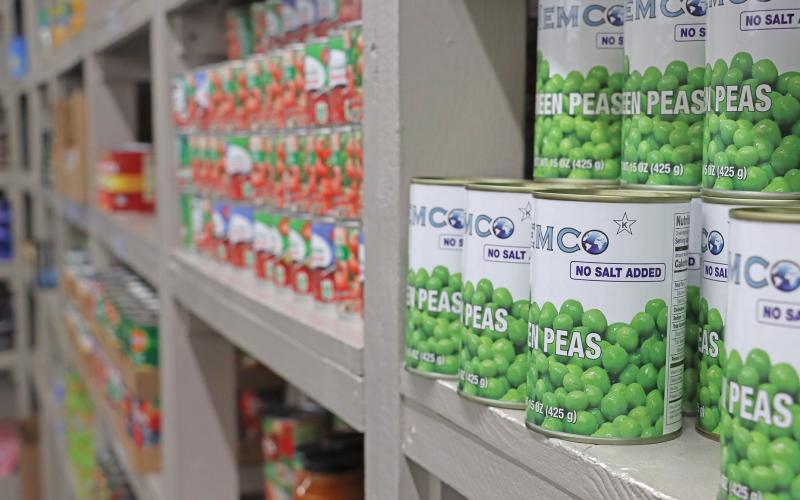 (ARCHIVE PHOTO | THE GRAHAM LEADER) Food stacked up in boxes at the Graham Crisis Center’s Food Pantry. The food pantry service is available to all whose income is below the poverty line.
 -
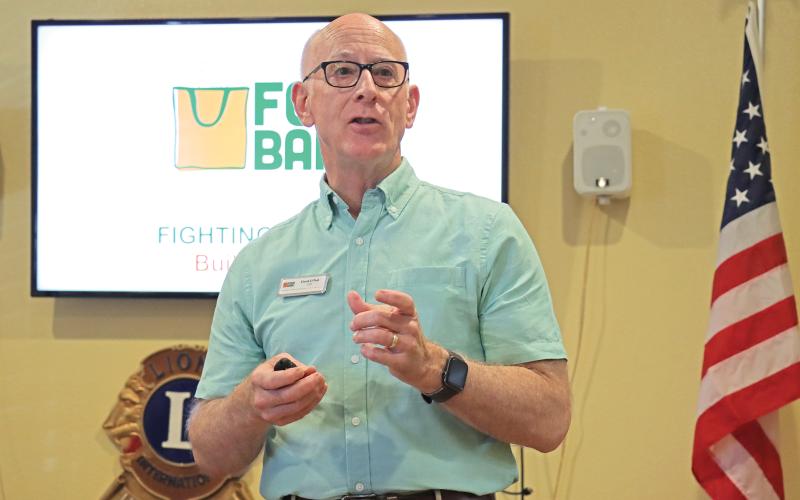 (ARCHIVE PHOTO | THE GRAHAM LEADER) Wichita Falls Area Food Bank CEO David O’Neil speaks with the Graham Evening Lions Club in July 2024 regarding the services they offer to 12 counties, including Young County through the Graham Crisis Center’s Food Pantry.
With passage of the H.R.1 “One Big Beautiful Bill Act,” changes are on the way with the Supplemental Nutrition Assistance Program that could impact Texas residents that utilize the food benefit program.
Wichita Falls Area Food Bank (WFAFB) said the act signed into law Friday, July 4 will impact access to affordable food for thousands across North Texas.
The organization distributed a total of 713,641 pounds of food to Graham from 2021-2023, with a total of 288,114 pounds distributed in 2023.
WFAFB region ranks 15th in food insecurity among 200 Feeding American Food Banks across the nation. Feeding American is a nonprofit organization composed of 200 food banks feeding more than 46 million people.
The new law includes $186 billion in cuts to SNAP and will increase the demand for food and social service from the organization’s already stretched network of 98 community partner agencies.
In the state of Texas, SNAP is supplied through a Lone Star Card that can be used similar to a credit card at any store that accepts SNAP.
These funds cannot be used to purchase tobacco, alcohol or to pay for owed food bills or purchase of items that cannot be eaten or drank. SNAP benefits can be used to purchase food online.
Those in low-income households are eligible for SNAP benefits if they fit within the family size maximum monthly income requirements. The maximum amount a family receives is also based on family size, with a one-person household eligible for $291 and a four person household eligible for $973.
Most adults aged 18 to 52 with no children in their home can get SNAP for only three months in a three-year period. This period can be extended if the person works at least 20 hours a week or is in a job or training program.
Adults who are disabled or pregnant are not held to the same work requirements for SNAP benefits.
One major change under the law also impacted the payment error rate measure of how accurately states determine who is eligible for SNAP benefits and allotments.
Under the law beginning in fiscal year 2028, if the payment error rate of a state is less than 6%, the federal share of the cost will be 100%. If states exceed that amount, they will be on the hook for a portion of the food benefit cost.
If that percentage is between 6-8%, the federal share of the cost will be 95%. If the percentage is between 8-10%, the federal share of the cost will be 90%. If the percentage is equal or is greater than 10%, the federal share will be 85%.
The national payment error rate for fiscal year 2024 was 10.93%, while the state of Texas’ error rate for the same period was 8.32%.
In March, Feeding Texas spoke on how the cuts would take food away from Texans and amend the funding structure. The organization said that in fiscal year 2024, states issued close to $94 billion for SNAP food benefits, with $7.2 billion from Texas.
“If this policy were to go into effect now, Feeding Texas estimates that Texas would be responsible for covering around $1.08 billion per year in food benefits,” the organization said in a release. “Using FY2023 SNAP administrative costs, Feeding Texas estimates that an increase from 50% to 75% would cost the state an additional $87 million per year. That comes out to $1.167 billion a year or nearly $2.334 billion per biennium that the Texas Legislature would have to front in order to keep the program whole.”
Other changes include limiting adjustments to the Thrifty Food Plan, putting seniors up to age 65 and parents on the three-month time limit requiring they document 20 hours of work to receive benefits. Additionally, refugees will be ineligible for SNAP benefits.
Graham Community Food Pantry Executive Director Joy Petersen said SNAP plays a vital role in feeding individuals in the community.
“Numerous families in Young County and across Texas depend on this essential program to nourish their loved ones,” Petersen said. “This decision… cuts our community deep and puts more of strain on an already strained time on not only our food pantry, but millions across America. No American should ever have to go home and sleep on an empty stomach. Period.”
The local food pantry serves around 1,350 individuals per month and distributes approximately 4,500 pounds of food per week.
“That’s 18,000 pounds of food given to our neighbors in need. The demand for food assistance is needed now more than ever and these drastic cuts are only increasing the numbers for all food pantries, and food banks across America,” Petersen said. “We will continue to do what we can, where we are, with what we have, and stand firmly ready to serve our community.”
According to Feeding America data, there was a total of $6.97 billion in SNAP payments distributed in 2024. Young County alone had a total of $3,002,050 in SNAP payments in 2024, with a total of 870,159 meals supplied.
WFAFB, which serves Archer, Baylor, Clay, Foard, Haskell, Jack, Knox, Montague, Throckmorton, Wichita, Wilbarger, and Young counties, released a statement about the bill’s passage.
“These cuts will further affect those who already struggle to afford groceries, rent, and healthcare, pushing them further into poverty,” WFAFB CEO David O’Neil said. “As the needs increase, the Wichita Falls Area Food Bank will continue to serve our communities and neighbors, but meeting this challenge requires all of us.”
The CEO, along with other food banks across the state within the Feeding Texas program, voiced their opposition to the bill and the changes in March.
O’Neil said this week that the passage of the bill calls on lawmakers and others to make a change.
“This is an opportunity for community partners, lawmakers, businesses, faith groups, and individuals to come together and support those facing hunger,” he said. “We need your help to get more food on our shelves, more meals into homes and more support into the hands of those who need it most.”